Friday, April 20, 2012

Mountains Sports in Huaraz

After Cusco, I spent 3 days in Huaraz, Peru, a mountain-sport paradise surrounded by legions of mountains, many of which tower above 6000 meters (the tallest, Huascaran, tops out at 6746 meters).  On my first day, I did a full day of rockclimbing in the lovely countryside, followed by a relaxing steam in a natural sauna in a cave.


The second day, I hiked up to Laguna Columa, a glacial lake located high in the Cordilleras Blancas and among the best day-hikes I've ever done!  After an hour on a crowded minibus up a rocky road, I started by hiking through rural farmland enjoying the sites, sounds and smells of farm life, harassed only by overzealous dogs with an uncanny ability to discern an "extranjero" (foreigner).  More bark than bite, they inevitably cowed when I picked up a stone or stick to threaten them with.


The trail steadily snaked upwards to the entrance of the National Park, where it steeped considerably.  With the reduced oxygen at 4000 meters, it became a real workout to ascend.  


After clambering upwards for another hour, including sections pulling myself up cables over steep, slippery granite, I was rewarded with this spectacular view of Laguna Charup at 4450 meters.


Unfortunately, in the late afternoon no minibus was heading back down from the trailhead, so I ended up walking the extra 19 kilometers back to Huaraz.  Needless to say, I was a bit sore the next day!


Peru - Machu Picchu 5 years later

A friend joined me for a couple weeks of travel in Cuzco, Peru.  Although I've been here before (5 years ago), I was happy to return as it really is a spectacular place.  For the first few nights, we stayed in the Sacred Valley at an excellent bed-and-breakfast that I would absolutely recommend to anyone (www.greenhouseperu.com).  Here's a shot from the back yard, to give you sense of the amazing scenery:


As a budget traveler (aka cheapskate), I normally don't stay in places like this.  But my friend had suggested this place because it ranked as the 6th best bed and breakfast in the world by travellors on Trip Advisor.  Surprisingly, it was only $75/night for a double room, with breakfast included!  Plus one of the owners took great pleasure in creating one-of-a-kind gourmet dinners every night, while the other owner led mediation classes in the morning.  Although it was hard to leave the comforts of this hotel, we did manage to get out and see some of the sites in Sacred Valley.

Las Salinas de Maras is a salt "mine", where highly-salinated spring water emerging from the mountainside is corralled in a haphazard set of terraces where it is evaporated to leave the salt for harvesting.


We also visited the Moray agricultural terraces.  It is hypothesized that the Incas located these agricultural terraces in favorable microclimates in tiny valleys - as opposed to the wind-swept, semi-arid landscape in the surrounding region - in order to develop better crop varieties.  In other words, it was an ancient experimental farm.


I also spent one day rambling over the mountains (up to 4500 meters) and through the country-side around our hotel, and was rewarded with some outstanding views of the Sacred Valley.  Many of the highest mountains have permanent glaciers above 5000 meters, although they are melting fast with global warming.


Of course we also went to Maccu Picchu.  When we first arrived in the heavy early morning fog, it was slightly disconcerting to see a guide holding a large photo of Machu Picchu in front of a blank fog wall for his clients, in lieu of the actual view.


Thankfully, for us (and for his clients), the fog lifted later in the day.  I'm not a history or anthropology buff, but Macchu Picchu is one of those places that everyone would enjoy, even with the hoards of gawking tourists.  Deep in jungle-clad, mist-shrouded mountains, the site is an absolute wonder.  Built around 1450, and abandoned 100 years later, it was unknown to the world until 1911.  It is also one of the few ancient cities untouched by Spanish conquistadors in the 15th, 16th and 17th centuries.

I hiked up thousands of precarious Incan stone steps to the top of Montana Machu Picchu, which looms over the ancient ruins.


From the peak, you get a strong sense of how isolated this ancient village was, situated amongst sheer, fog-shrouded mountains and deep valleys bisected by raging rivers.


Up close, you get a better sense of how well developed this ancient city was, and how painstaking it must have been to shape the stone by hand to fit so tightly together.


We spent the last few days relaxing in the ancient city of Cuzco.  Like most Peruvian cities, Cuzco is mostly drab and crowded with polluting vehicles, although as the capital of the Incan empire and an important colonial city, it has tremendous historical significance and consequently a number of good museums, archeological sites and old churches.  We were there for Semana Santa (Easter Week), and were able to join the throng following the Holy Procession as it wound through the historical center of the city.


We were also treated to a typical Peruvian meal prepared by Mama Zeta and her son, Martin, the owners of the apartment we rented. She took us on an early morning trip to the local market to purchase the ingredients.  It was quite a sensory experience: raw carcasses hanging next to overflowing sacs of colorful produce - with the correspondent odors - and of course the cacaphony of voices bargaining.


After a couple hours of preparation, we sat down to a delicious meal of stuffed hot peppers, roasted sweet potatoes, corn on the cob, and crispy-fried pork.  I think I look slightly stunned in this picture because I was starving after watching Mama Zeta cook this wonderful meal.


Friday, April 6, 2012

Volunteering in Nicaragua

For my first week in Nicaragua, I volunteered with Habitat for Humanity, helping to build a home for an elderly man.  Our team consisted of 9 Canadians from across the country, along with some local Nicaraguan staff for Habitat for Humanity.  The 63 year old man for whom we built the house had lived in a various shacks made of plastic, scraps, and branches for more than 50 years.  Here was his current "house"!


Inside this shack, he slept on thin, dirty mattress on a rickety frame made of branches and he cooked on a smouldering fire, with chickens and dogs running freely around on the fetid dirt floor.

The labour-based economy in Nicaragua became clear on the first day, when our team spent a few hours at the brick factory helping to manufacture a batch of adobe bricks, which we would later use to build the house.  Other than the hydraulic press that formed the bricks, the only other "technologies" available were shovels and rakes. All the tedious mixing of the clay, lime, cement and water was done on the ground, by hand.


That afternoon we travelled to the jobsite and began building the house.  With some construction experience, I was given the job of being an assistant "albanil" (bricklayer) for the week.  I was also given the nickname "chele" which I promptly misinterpreted to mean "boss" but soon found that it actually meant "blondie" or "whitie".  For that error in judgement, I was rightly ridiculed by other members of the team!

Carlos was the real boss, the local professional bricklayer who had been hired to run the jobsite and who had a special talent for making do with what was at hand.


He only had a little english and I only had a little spanish, but we managed to communicate with a combination of stilted language and hand signals.  It was a great learning experience, as well as a good exercise in patience, as I struggled to not make "suggestions" on how to do things better/differently.  Because labour is the most readily-available resource, there are not strong incentives to mechanize.  At the start, I had expected that we would easily finish the house, with our team of 9 volunteers, 3 habitat staff, and one professional.  After a few days, it became apparent that was not going to happen.  However, we did get the walls to about 75% of their finished height.  And we did spend an afternoon visiting some of the houses that had been constructed by previous teams, so I was able to get a sense of the positive impact Habitat was making.


My time spent with the Habitat team concluded with a few days of R&R in Grenada, where we visited one of the many active volcanoes in Nicaragua and took a fantastic boat tour through Las Isletas on beautiful Lago de Nicaragua (Lake Nicaragua).


I spent another few days in the surf town of San Juan del Sur, on the southwestern coast of Nicaragua, before crossing the border into Costa Rica.  I apologize that I don't have more/better pictures, but my camera decided to take an extended vacation from my vacation midway through my volunteer stint, so I only had my Iphone camera to work with after that.

Wednesday, February 29, 2012

Mexico 2012


I arrived in Mexico with some trepidation.  From the little research I had done, it was clear it was a fascinating and vibrant country, full of things that I enjoy about travel.  But it was hard to quell the mild anxiety stemming from the media's portrayal of the country as drug and violence-plagued place, with robbery and murder around every corner.  So I resolved to put aside my anxiety - without being careless of course - and get to know Mexico.  

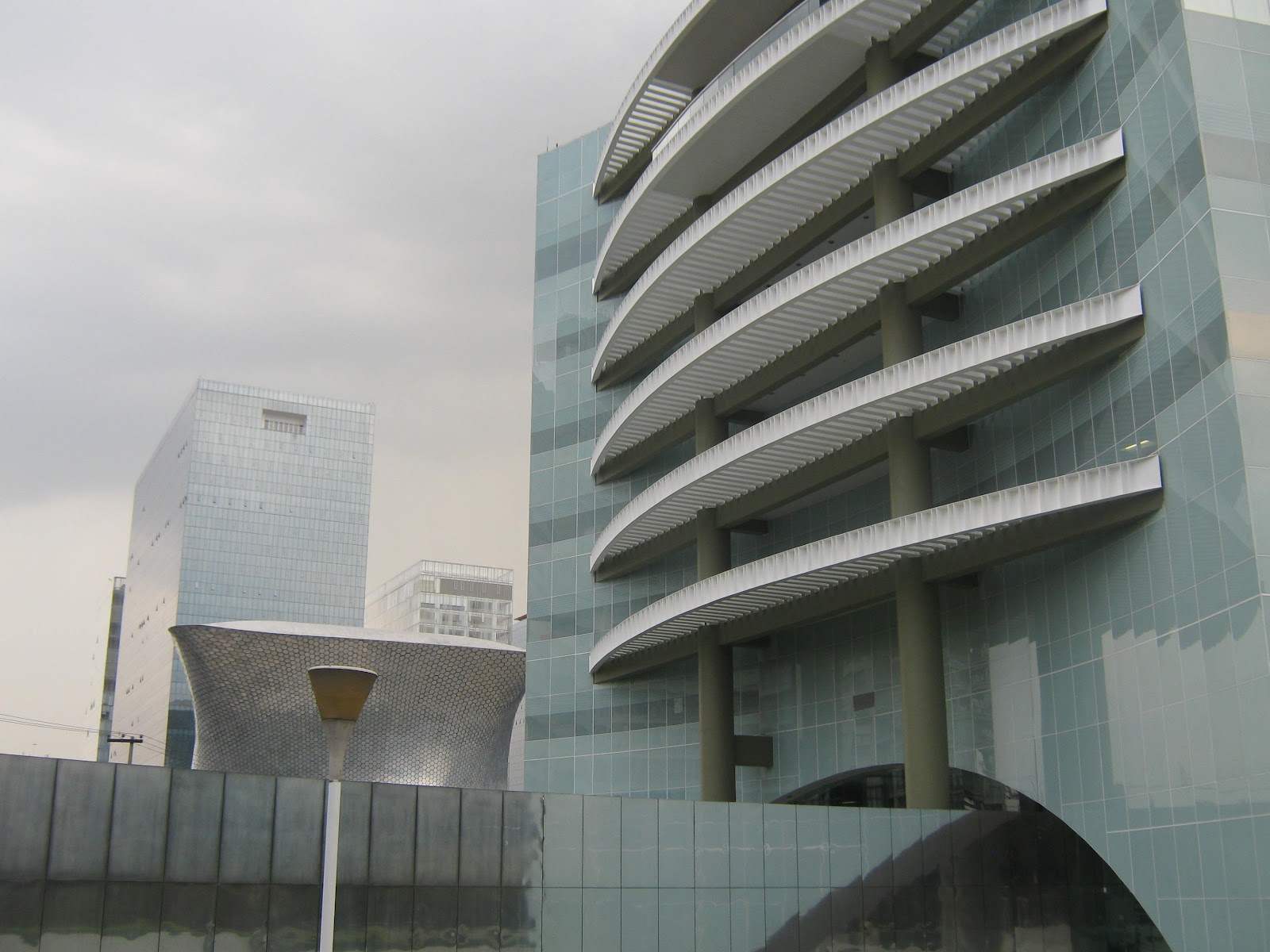
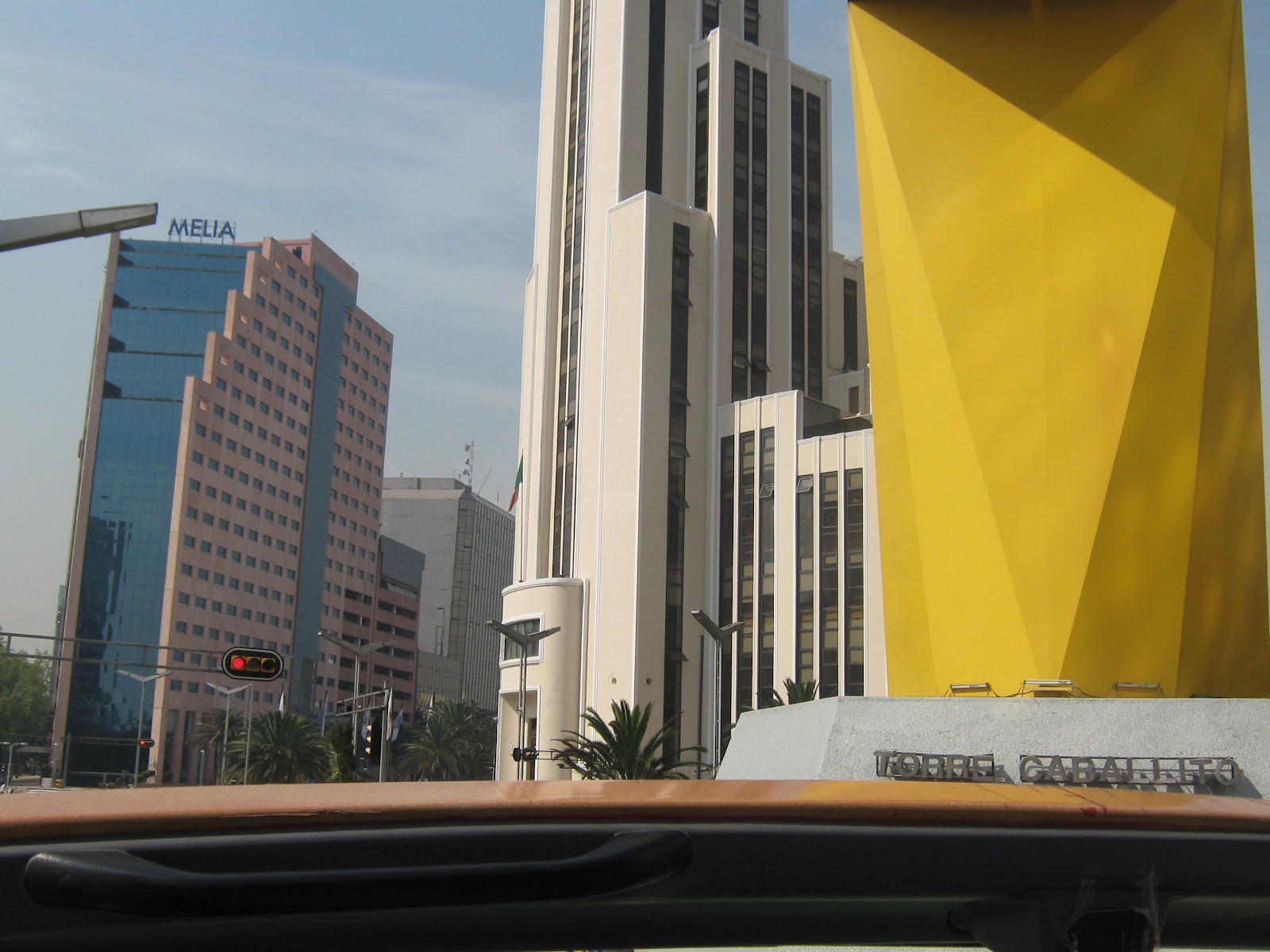
Mexico City was my first pleasant surprise.  It's a modern, bustling city, filled with world class museums and art galleries, and some pretty funky architecture.  


Next was Morelia, an atmospheric little city tucked into the mountains west of Mexico City, where I had one of those "top 10" travel experiences - the monarch butterfly sanctuary.  Literally billions of monarch butterflies migrate from Canada and the United States and cluster together in sanctuaries on mountain peaks.  As our tour began ascending through the sanctuary, everyone was pretty excited when a few butterflies were fluttering around, and the cameras began clicking.  Little did we know!

As we climbed higher, the butterflies increased exponentially - from tens, to hundreds, to thousands, to millions.  Monarch butterflies are highly attuned solar collectors so, when the sun emerged from behind a cloud, the air quickly thronged with butterflies.  When clouds obscured the sun, they settled back onto the trees within minutes.


Arriving at the top of the sanctuary, I was astounded to realize that the huge grey clusters hanging from the trees were not plant matter but were actually densely packed monarchs with with folded wings exposing the drab underside.  Some stubborn clouds were hiding the sun as we approached the top, and we worried that we might miss the full experience.  But after fifteen minutes, the sun emerged and the clusters quickly dissolved as the air became thick with fluttering wings.  The first video below shows the clusters during the cloudy period; the second video is after the sun emerged.


It was quite a profound experience to hear millions of butterfly wings flapping.  It actually sounded as if a breeze was blowing through the trees, even though it was completely still!

Next was the Pacific coast, where I spent some quality time with my Uncle Lou and Auntie Wynn, who live in Barra de Navidad.  My cousin Ian, who I hadn't seen in a while, was also visiting his parents so I got the added benefit of catching up with him too.  I had a number of great experiences here: visiting a isolated beach and seeing whales cavorting in the ocean, including a few who jumped entirely out of the water (but were too far away for photos); watching hundreds of pelicans dive-bomb for fish: a regional soccer finale; and an earthquake!  It was short - only a few seconds - but quite an experience as it was the first earthquake I've been through.  It's disconcerting, to say the least, watching a large concrete home shudder around you.


Next was Oaxaca, undoubtedly the nicest city I visited in Mexico  Colonial architecture was everywhere, as were massive cathedrals.


It was a great city to wander in, popping into coffee shops, restaurants, galleries, museums and markets.  As well, outside of Oaxaca are a number of fascinating natural sites, including Nierve el Agua with it's petrified waterfall and natural infinity pool:


After a week on the beautiful beaches of Puerto Escondido, a world-renowned surf town on the Pacific coast (where I put in some time towards my goal of being able to surf properly), I headed inland again, to the city of San Cristobal de las Casas.  After Morelia and Oaxaca, I thought I might be somewhat indifferent to cute little colonial cities ... but that was not the case with San Cristobal.  Nestled in a cool mountain valley, it's renowned for it's cobblestone streets, quaint buildings, tranquil location as well as the natural wonders in the surrounding region, notably Sumidero Canyon.  I took a boat tour through the canyon, between the sheer vertical walls that tower up to a kilometer above the Grijalva River.


The fascinating, 150 meter high "Christmas Tree" formation shown below is actually a series of stone shelves constructed by centuries of water flowing out of the canyon wall and releasing dissolved sediments (in much the same way a stalactite forms).


After San Cristobal, I headed southwards towards the Mayan ruins at Palenque.  Enroute, I stopped at Agua Azul, with it's striking blue water contrasted against a brown limestone bed, tumbling through a fecund jungle.  Stunning!


The Palenque Ruins were as I envisioned Mayan ruins to be - crumbling stone buildings emerging from the thick jungle.


I also visited the ruins at Tulum which, although not nearly as large as the ruins at Palenque, have a pretty spectacular cliffside location, overlooking brilliant white beaches.  In Tulum, I also took the opportunity to go cenote diving, which is one of the more well-known adventure activities in the Yucatan Peninsula.  Cenotes are basically sinkholes that open-up into the vast network of underground caves, many of which are filled with a combination of freshwater and saltwater.   Essentially, you dive down into the sinkhole and then head off laterally into the connected caves (not too far of course!).   While there are not a lot of flora or fauna in the caves, the rock formations are spectacular, as is the adreneline rush from swimming through narrow, dark caves!   Unfortunately, I don't have a underwater camera so I've had to borrow the pictures from the web:

Google's collection of Cenote Diving Pictures

I ended my time in Mexico spoiling myself with some nice hotels in Cozumel and Cancun (along with thousands of other Canadians)!  I can see why people flock here in droves - the beaches really are spectacular - but the atmosphere was nothing like the rest of Mexico, so I was happy to only spend a few days here, before boarding my flight to Nicaragua.

Ultimately, travel in Mexico was wonderfully contrary to my initial perceptions.  Sure, there is a bloody drug war taking place in certain parts of Mexico, especially the north - e.g., Ciudad Juarez - but it felt very safe and comfortable in every place I ventured.  Here's a telling statistic from the Canadian Department of Foreign Affairs: of the 1.6 million Canadians who visited Mexico in 2010, there were only 5 murders and 11 killed from other causes.  Tragic for the people involved, of course, but a statistic that certainly doesn't suggest crime around every corner.  Here's an interesting article from the Economist on this topic as well:
http://www.economist.com/blogs/gulliver/2010/08/mexico

The simple fact is that the Mexicans I encountered were, almost without fail, friendly, civil, and polite.  And, of course, the scenery was beautiful.

Friday, March 4, 2011

Thailand 2011

My first stop after Japan was Bangkok. I went in with a lot of expectations based on its notoriously colourful history, but found it to be a lot like many asian cities - interesting and sensory, but in the grip of an all-out race to develop and modernize, which means oppressive traffic and pollution, and glitzy shopping malls. Of course, I was only in the city for 5 days, which is hardly enough time to draw any meaningful conclusions about a city of almost 10 million people, but it seemed to me that Bangkok's time as the wildly bacchanalian centre of Asia has passed.  Bangkok definitely has its charms though; the "Wats" (Buddhist temples) are very eye-catching, with elaborately detailed temples and shining golden Buddha statues (including the massive reclining Buddha shown below).   One particular temple had a 500 meter long, intricately painted mural which detailed the religious mythology.  Fascinating - I spent a couple hours taking in the fantastical imagery.


Riding the water "bus" around the old city watching the scenery go by and stopping to explore colourful markets and excellent seafood restaurants is another great Bangkok experience.


After Bangkok I headed south to visit the famous beaches in Phuket. Beautiful indeed, but with a crush of European, Australian and North American tourists. And, or course, a disproportionate number of elderly white males shamelessly lingering in the endless go-go and hostess bars.  Sex tourism is definitely alive and well in Thailand, although it seemed to be as much about "lonely old men" as about "dirty old men". 

During the week I was in Phuket, I took a kite-surfing course.  Kitesurfing is basically riding a surfboard while tethered to a large parachute-like kite that you can steer.  It was quite challenging, particularly since I'm definitely not a natural when it comes to water-sports.  But it was a fun experience regardless and since Canada apparently has some very good kitesurfing zones, hopefully it's something I can continue when I return (although I'm sure I'll miss the tropical warm water when I lose control of the kite and do a faceplant into ice-cold Lake Ontario)

After Phuket, I ferried across the bay to the picture-perfect Railay peninsula, notable for its stunning beaches and striking terrain, and world-famous as a rock climbing destination. As you can see, the jutting limestone karsts are well-suited for climbing.


I'm pretty new to climbing and it was a great learning experience to watch and/or belay other advanced climbers as they scaled impossible-looking cliffs. One of the more unique climbing experiences in this area is "deep water soloing", which basically means free climbing cliffs (i.e., without ropes) that hang out over the water. The idea is to climb as far as you want (or are able) and then simply push out from the rock and plummet into the sea. My skill and nerves only got me to 10 meters or so before jumping off, but some of the more advanced climbers got upwards of 30 meters and then, unbelievably, jumped from these heights and torpedoed into the water, as seen in the video.


This fearless Aussie climbed to the spot where the X is, and then jumped ... crazy! 


On the way back from the deep water solo, we stopped at a very picturesque island/sand bar for dinner. The couple who had chosen this location for a private wedding ceremony were probably not excited as our boats landed (although it is a public beach), but their special moment did make for some nice photos, as did the sunset.


After I'd had my fill of the beach (and tourist) scene, I headed to Chang Mai in the north to get a more authentic feel for Thailand. Chiang Mai, at the foot of the northern mountain ranges, is a very engaging city. It has a wonderful night market with a wide range of arts and crafts available, including some of the best hand-drawn portraits I've ever seen. These guys had amazing talent; for about $15 they would draw your portrait which, when finished, was almost indistinguishable from a black and white photo. I wish I'd taken some pictures of their work or, better yet, had them do a portrait.  Next time!

In Chiang Mai, I rented a scooter and embarked on a trip through the northern mountains. Because it was the dry season and the air was filled with the haze from burning rice fields, the colours were muted. Nevertheless, the scenery was still quite striking, especially along the narrow mountain roads snaking up and down the mountain ranges on the border between Thailand and Myanmar. These winding roads were a lot of fun on two wheels, with numerous stops at quaint little mountain villages. Because of the great scenery, I ended up travelling about 500 km on my scooter!


One of these villages was Tha Ton, known for the mountain-top temple that looms over the town and from which you can peer across the mountains into Myanmar.


In addition to the freedom of cruising through outstanding scenery, one of the unexpected sensory pleasures of motorbike travel is the diverse olfactory experience: the spicy smell of burning rice straw; brief whiffs of jasmine and other flowers; and the heavy organic smell of the jungle ... all particularly vibrant when contrasted against the recurring smell of pollution and sewage.

On the return trip to Chiang Mai, I passed through the city of Chiang Rai. Unfortunately, I was sidelined here with "traveller's tummy" for a couple of days. However, before the nausea struck, I did visit the nightly food market and worked up the courage to eat one of Thailand's more unusual snacks: deep fried, salted insects (I don't think they were responsible for the sickness). The grubs and crickets weren't too difficult to eat, but the first bite of the 2 inch long cockroach was quite challenging. That said, salt always makes things easier to eat and, indeed, I cleaned up all the salty insect bits even before I finished my beer! An interesting experience ... but it won't take the place of a bowl of peanuts or pretzels for me anytime soon!


As a predominantly Buddhist country, colourful Wats/temples can be found everywhere in Thailand. Just outside of Chiang Rai is one of the more interesting Wats in Thailand: the "White Wat". Recently constructed by one of Thailand's most famous (and controversial) artists, it is full of fantastic imagery, including a pit of straining hands over which you walk to enter the temple (symbolizing suffering on the way to Nirvana).


Unfortunately, my visa had expired by the time I returned the scooter to Chiang Mai, so I unwillingly had to move on from Thailand.  I flew to Singapore for a few days of relaxation in the generous hospitality of Sheena and Dave, and then to Ho Chi Minh City (Saigon) in Vietnam, which will be the subject of my next post.

But I would be remiss not to mention one of the other great experiences - the outstanding Thai cuisine! Fiery green and red curries, sumptuous pad thai, fresh seafood, diverse fruits and juices, excellent coffee and, of course, some of the finest rice in the world. Surprisingly, given the rich flavour, Thai food is easy to make, with a relatively small list of ingredients and simple cooking methods, as I learned in a cooking class in Phuket.


Ultimately, it is said that Thailand is the land of smiles, and the Thai charm is certainly infectious.  Budget travel can be a frustrating experience at times, but it is much more tolerable in a place like Thailand.